
Find out how Royal Netherlands Air Force engineers use Ultimaker 3D printers in routine aircraft servicing.
The military base in Woensdrecht (Woensdrecht) is the main location for the maintenance of the Air Force of the Kingdom of the Netherlands. The staff on a regular basis perform maintenance and repairs on aircraft such as the Chinook, Apache, NH90, F16 and many others. The base is also home to a military academy as well as several Ultimaker 3D printers.
"We have really specific things in war aviation, that's why we make the tools ourselves"
Workshop at the academy
Bas Jansen, member of the Ambition Innovation Results division, focuses on gathering and sharing knowledge about manufacturing technologies such as laser cutting, 3D printing and many others. The way he does this is by running a workshop within the Air Force: The McAirsJop.
His workshop helps maintenance and engineering students find innovative solutions to challenges in their work. In the beginning, Bass hosted workshops using several Ultimaker 3 3D printers. Shortly after becoming familiar with the hardware and software, Bass and his colleagues began to see new opportunities to improve the speed and efficiency of maintenance at the base.
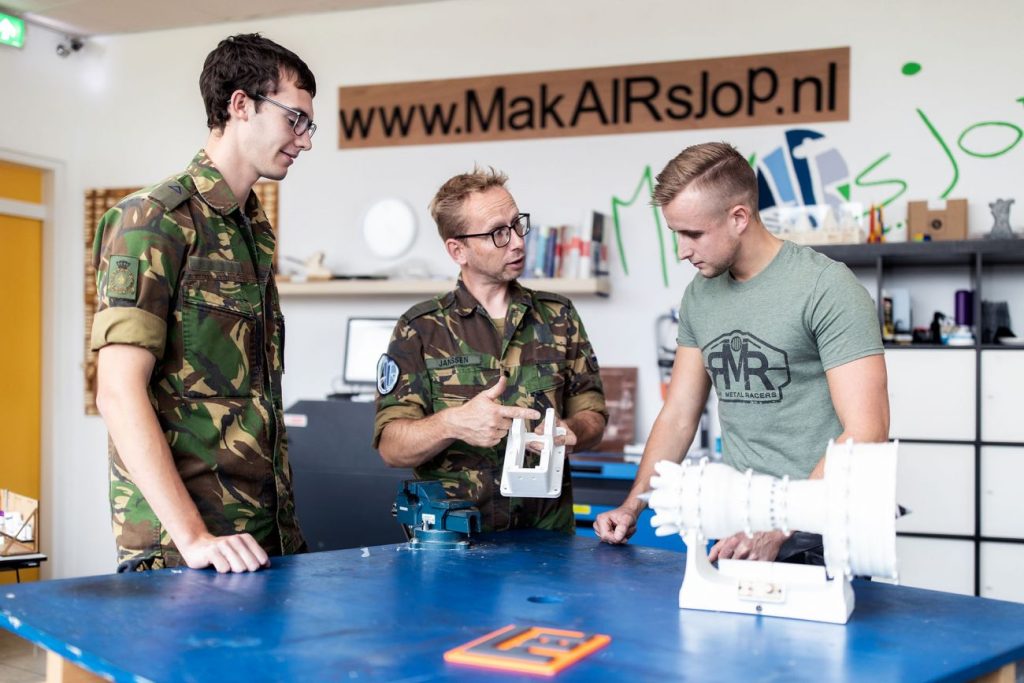
"People who work with 3D printers often have no technical background, but they only need 3 hours of training. After that, they start looking for solutions to the problems they have in their work."
Spare parts, tools and guides
Maintaining such complex and unique aircraft can be a huge challenge: there are a lot of unusual parts and systems to work with. 3D printing simplifies work. It offers a way to produce tools that meet these specific requirements within hours. This is something that Bass and his colleagues quickly realized. Instead of working with subcontractors, they've printed tons of parts for the past two years, saving time and money.
For example, when jet engines are transported, certain openings must be covered caps. These parts are expensive to purchase and their delivery is slow. However, using Ultimaker 3D printers, it only takes two hours to make them.
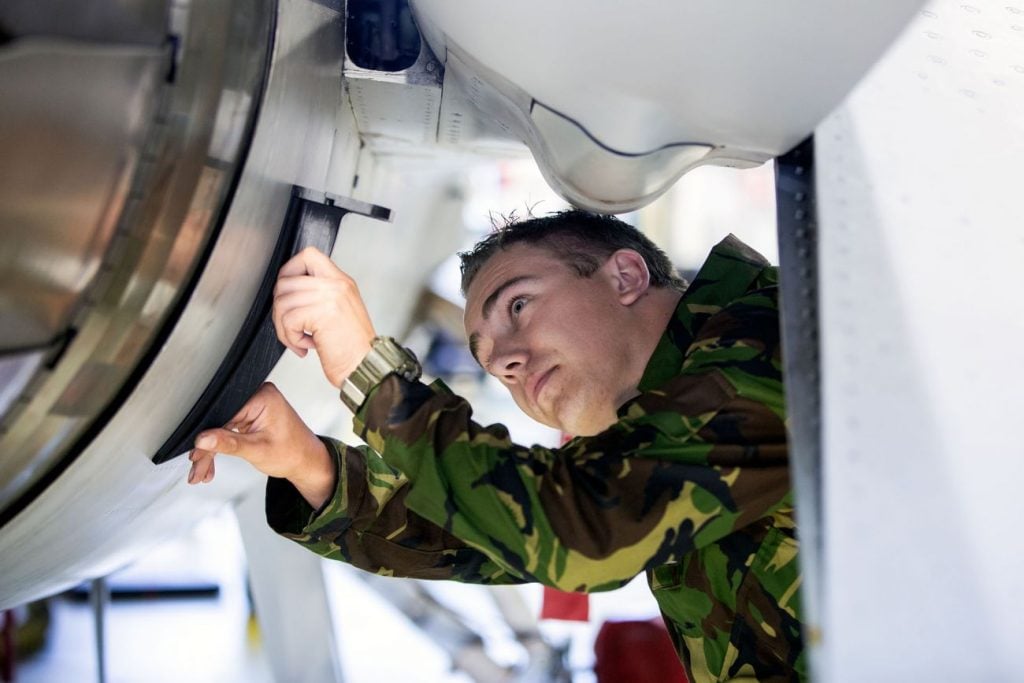
"We use Ultimaker to build tools, guides and prototypes to the highest standards."
Ultimaker 3D printers are also used to make special equipment adjustment tools. For example, certain helicopter parts are difficult to adjust once installed. Using a simple 3D-printed part, these adjustments can be made prior to placement on the helicopter, saving the team several hours per aircraft.
Some metal parts must be CNC machined. For this application, Ultimaker 3D printers are used for prototyping and testing that parts fit together. In this way, design iterations can be done easily and cost-effectively before making a usable part.
3D printing takes off
After the initial success of the workshop, the Royal Netherlands Air Force continued to expand its activities in the field of 3D printing. They recently added the Ultimaker S5 to their line of 3D printers to print larger parts and start using new, more advanced materials.
Right now recommends that each Air Force maintenance site should take advantage of 3D printing. "Our transition to the fifth generation of war aviation is possible only with people who understand that they can be a part of it change now, not later. Ultimaker enables just that: it helps people to understand what additive manufacturing can do for them today – without the long curve learning. Current software and hardware help people make their ideas come true reality."
His team is able to share 3D models, create new designs and support local staff in using 3D printing. In this way, military engineers from the maintenance sector can produce the appropriate tools themselves locally.
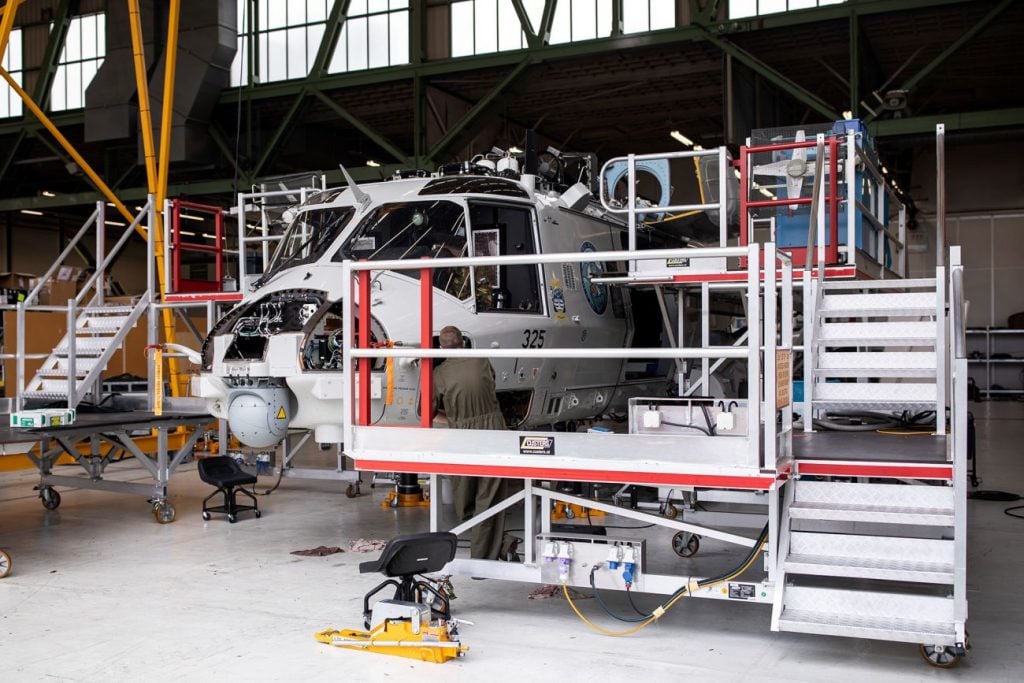
"The 3D printer should be a common tool in your toolkit for making things."
Are you planning to include a 3D printer in your workshop? Contact us to find the right solution for you.