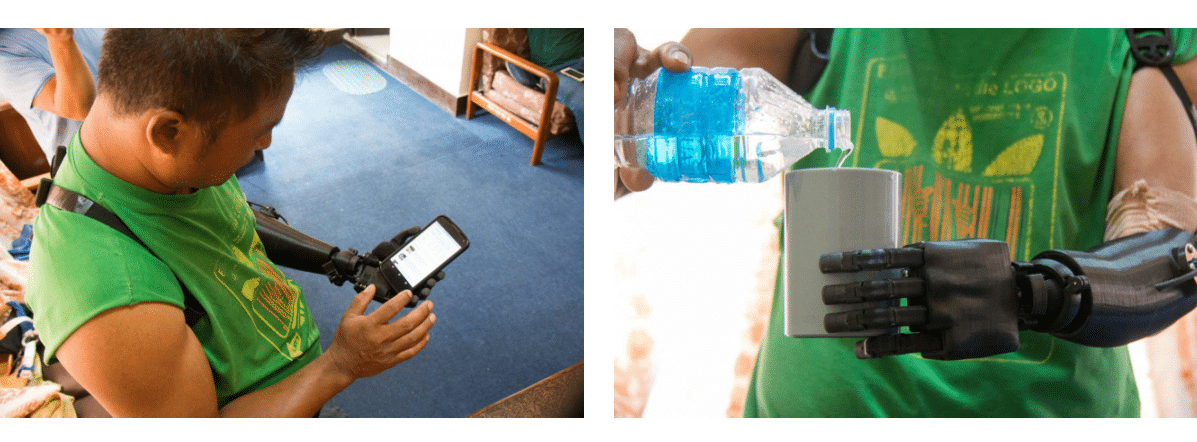
At Victoria University, a team of engineers, designers and volunteers are working hard to create a 3D printed prosthetic hand for people in the most disadvantaged and deprived areas. There are many challenges, but the results they achieve are incredible. They are the Victoria Hand Project and this is their story.
Adjustable grip
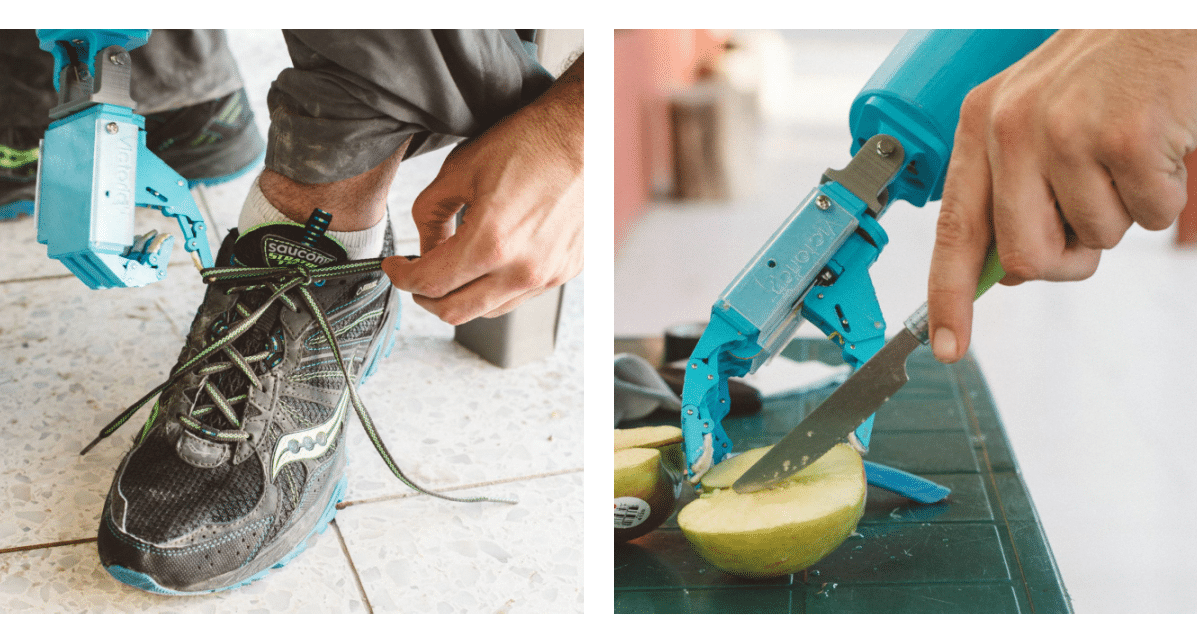
In the late 90s, Dr. Nikolai Dechev worked on his master's project and created a prosthetic hand, with an innovative technology he called "Adaptive Grip". "Adaptive grip" allows the fingers to grip the object when the hand is closed. At that time the arm was designed to be produced on a CNC machine. Due to the high cost of production, they came up with an ideal solution with the help of 3D printing. After realizing this fact, Dr. Decev and his colleague Joshua Coates modified the design and started the "Victoria Arm" Project.

Prosthetics are often not available to people living in developing countries due to limited financial resources. Therefore, 3D printing is a solution for the team of people working on printing and assembling the prosthetic arm, allowing for a lower cost.
With a 3D printer and the right filament, a clinic can print a personalized prosthetic arm or replacement parts, even in faraway countries. For example, in Nepal, a team of engineers travels and creates medical equipment and replacement parts for machines. It is easier and cheaper than transporting large boxes of specific parts.
They need a 3D printer that offers the highest quality finish, with a strong bond between each plastic layer. The Ultimaker 2 is ideal thanks to its quality, ease of use and affordable means of maintenance and troubleshooting.
How does it work?
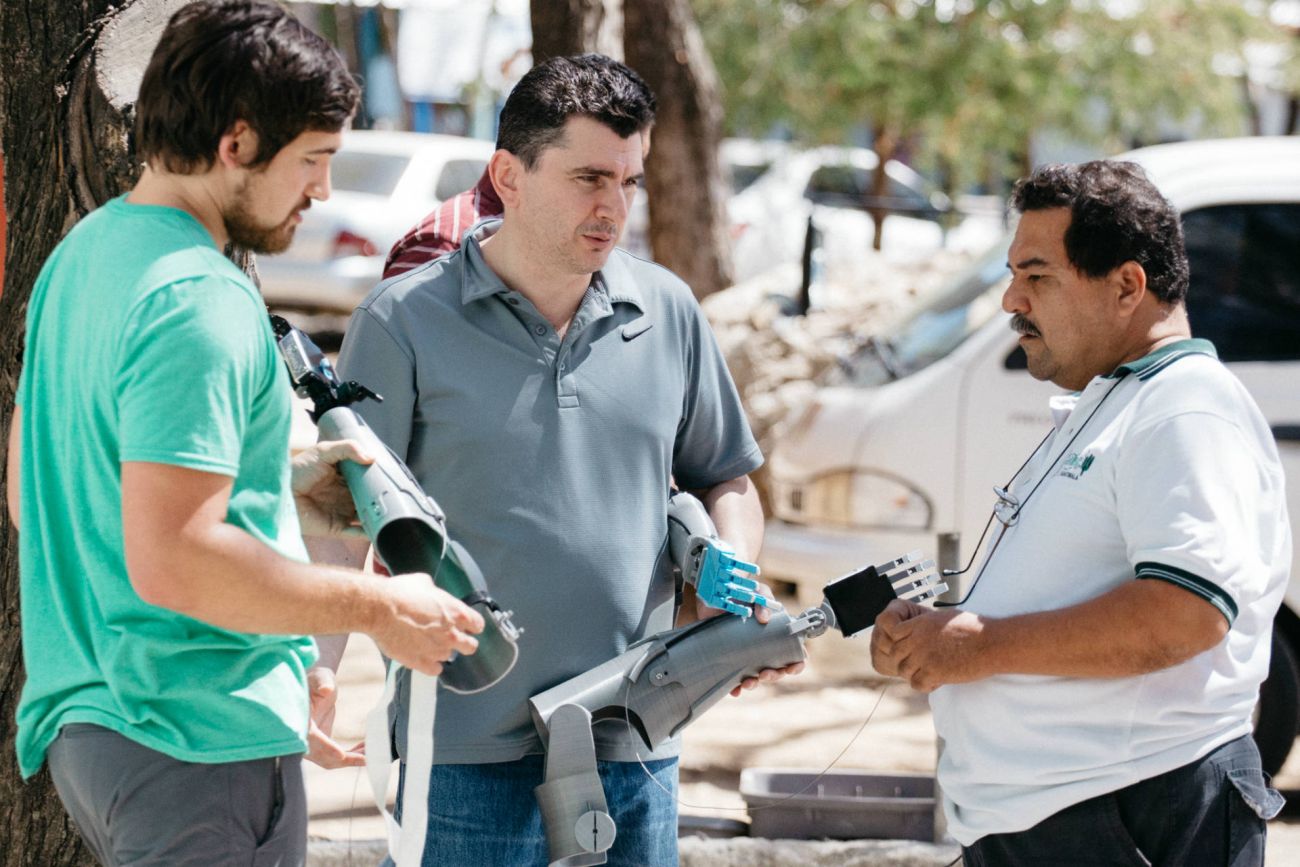
At the beginning, the patient goes to the therapist for an examination and taking measures. A mold is created based on their personal measurements of the remaining limb, then the prosthetist creates the interface between the device and the human body.
In the Victoria University team, hands are made by prosthetists who have skills in 3D scanning and making plaster casts. This scan is used to create a custom, 3D printed cup for patients. The hand and wrist are printed within 48 hours, then mounted and attached to the patient's cup. The final step is painting the prosthetic arm to match the patient's natural skin color. This aesthetic moment gives the patient more self-confidence. Training is provided to 3D printing staff, as well as prosthetists and therapists.
 Challenges for 3D printing
The Victory Hands team researched different 3D printers and came to the conclusion that the Ultimaker 2 was ideal for their needs. They also originally ordered an SLA 3D printer, but there were a lot of failed prints. Also, the parts were too fragile for practical use. Ultimaker proved to be the easiest to use, i.e. clinic workers and prosthetists were able to master handling the printer very quickly.
They encountered difficulties at first, but Ultimaker's instructions and forum helped the team learn to use and maintain the printer. The quality of the printed models improved and the entire production sped up.
During the years of work, the team gains valuable experience using 3D printers, and they are able to help and provide technical support to other clinics. They personally train medical professionals to ensure they learn how to assemble and adjust the prosthesis.
The team realized how many differences and problems exist between printing in the clinic itself and printing at Victoria University. In Nepal, for example, there are daily power outages. Without an aggregate, no cup can be printed. In other clinics, heat and humidity can change the material's properties. In Kathmandu, there is a lot of dust in the air, which means that the build plate has to be cleaned more often, which makes the process more expensive. Plus, shipping and import taxes make it more expensive to replace even a small part like a nozzle.
 Choice of materials
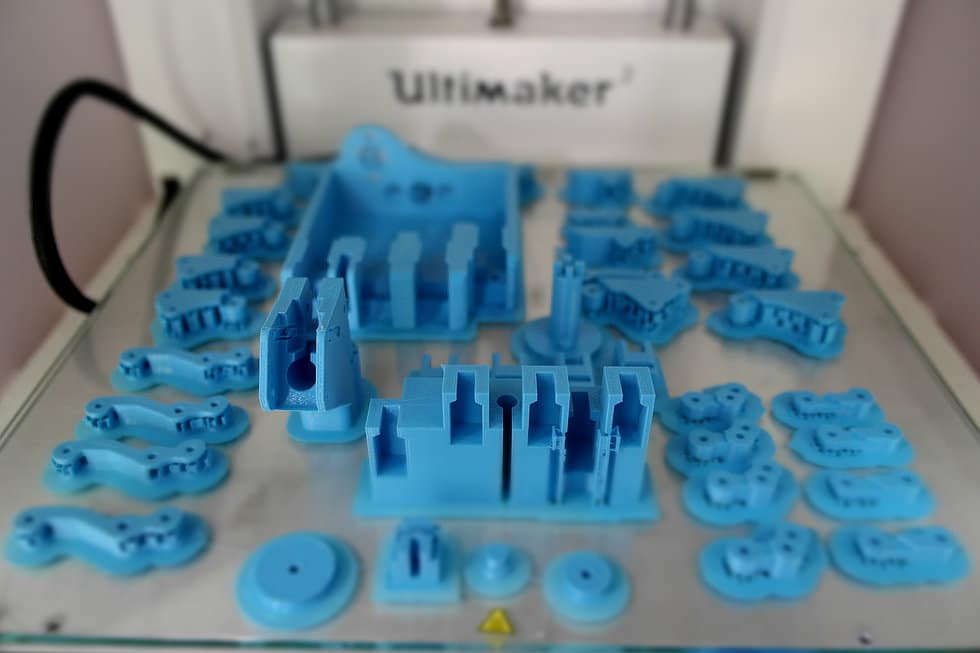
Sometimes, it's a challenge to find out what the best settings are for printing and working. With the Ultimaker 2+ printer, the Victoria arm team tested the print speed and layer height to find the optimal settings. He also tested different materials such as PLA, ABS, nylon and PET. Student engineers volunteered to take over the testing and analysis of each case. These tests allowed the "Victory of the Hand" team to further improve their project. The volunteers decided that black
PLA was the best material, since it was also an easy material to work with. Other materials are harder to print - for example
ABS is stronger but didn't stick to
the build plate as well. The use of this material would be problematic for less experienced medical personnel. PLA offers excellent quality and ease of use, so it was chosen as the best material suitable for this project.
 From Guatemala to Cambodia and beyond
After receiving funding from Grand Challenges Canada, the Victory of the Hand project joined forces with Range of Motion from Guatemala. Together, they quickly realized that pets need quality prostheses, but without high costs. Joshua Coates, a designer, recalls his third visit, when he saw the full potential of the 3D printer.
Until then, he focused on developing the functionality of the hand. After the third trial, the functionality, ease of use and aesthetics of the hand have improved significantly. The effort paid off and they finally got results that affect the quality of life of the patients.
Since then, the Victoria Hands project has started cooperation with other partner clinics from Nepal, Haiti, Cambodia and Ecuador. Clinics have found patients, are printing, assembling hands and adjusting prostheses. The team of the Victoria Hands project sets up the equipment, trains the medical staff, offers support and accompaniment throughout the work.
 Sponsors and Patrons
The entire project would not be possible without several generous donations. Grand Challenges Canada funded initial development and trials, and helped establish additional clinics. Ultimaker donated four Ultimaker 2+ printers, a key component for the operation. The Enable Community Foundation funded the clinic in Haiti, and other donations came through crowdfunding and various forms of fundraising.
Although the Victoria arm team collaborates with E-nable, the design teams are now separate. The reason for this is that E-nable offers an open-source model, giving people the ability to download a design and print it anywhere with the help of a 3D printer. The Victory of the Hand project provides the .STL file and Gcode to contributors only. This allows for exceptional quality of the prosthetic arm as well as maintaining a good reputation.
 New devices
In addition to 3D printing the prosthetic arm, the team has begun developing new medical devices with the help of 3D printing such as an adjustable foot prosthesis, joint and toe prostheses. They use the same hardware and materials so all they have to do is email the design to the clinic and the printing can begin.
The parts are thermally formed using a heat gun or using hot water, which is possible thanks to the thermoplastic properties of PLA. As the material softens, it can form around limbs, and when it cools it becomes rigid and supportive.
The future
The Victory Hand project aims to reach more patients, more funding and more partnerships around the world.
Spreading the word and raising funds are the main factors to make all of this happen.
Watch
the video on the site and learn more about this amazing project.

 Prosthetics are often not available to people living in developing countries due to limited financial resources. Therefore, 3D printing is a solution for the team of people working on printing and assembling the prosthetic arm, allowing for a lower cost.
With a 3D printer and the right filament, a clinic can print a personalized prosthetic arm or replacement parts, even in faraway countries. For example, in Nepal, a team of engineers travels and creates medical equipment and replacement parts for machines. It is easier and cheaper than transporting large boxes of specific parts.
They need a 3D printer that offers the highest quality finish, with a strong bond between each plastic layer. The Ultimaker 2 is ideal thanks to its quality, ease of use and affordable means of maintenance and troubleshooting.
How does it work?
At the beginning, the patient goes to the therapist for an examination and taking measures. A mold is created based on their personal measurements of the remaining limb, then the prosthetist creates the interface between the device and the human body.
In the Victoria University team, hands are made by prosthetists who have skills in 3D scanning and making plaster casts. This scan is used to create a custom, 3D printed cup for patients. The hand and wrist are printed within 48 hours, then mounted and attached to the patient's cup. The final step is painting the prosthetic arm to match the patient's natural skin color. This aesthetic moment gives the patient more self-confidence. Training is provided to 3D printing staff, as well as prosthetists and therapists.
Prosthetics are often not available to people living in developing countries due to limited financial resources. Therefore, 3D printing is a solution for the team of people working on printing and assembling the prosthetic arm, allowing for a lower cost.
With a 3D printer and the right filament, a clinic can print a personalized prosthetic arm or replacement parts, even in faraway countries. For example, in Nepal, a team of engineers travels and creates medical equipment and replacement parts for machines. It is easier and cheaper than transporting large boxes of specific parts.
They need a 3D printer that offers the highest quality finish, with a strong bond between each plastic layer. The Ultimaker 2 is ideal thanks to its quality, ease of use and affordable means of maintenance and troubleshooting.
How does it work?
At the beginning, the patient goes to the therapist for an examination and taking measures. A mold is created based on their personal measurements of the remaining limb, then the prosthetist creates the interface between the device and the human body.
In the Victoria University team, hands are made by prosthetists who have skills in 3D scanning and making plaster casts. This scan is used to create a custom, 3D printed cup for patients. The hand and wrist are printed within 48 hours, then mounted and attached to the patient's cup. The final step is painting the prosthetic arm to match the patient's natural skin color. This aesthetic moment gives the patient more self-confidence. Training is provided to 3D printing staff, as well as prosthetists and therapists.
 Challenges for 3D printing
The Victory Hands team researched different 3D printers and came to the conclusion that the Ultimaker 2 was ideal for their needs. They also originally ordered an SLA 3D printer, but there were a lot of failed prints. Also, the parts were too fragile for practical use. Ultimaker proved to be the easiest to use, i.e. clinic workers and prosthetists were able to master handling the printer very quickly.
They encountered difficulties at first, but Ultimaker's instructions and forum helped the team learn to use and maintain the printer. The quality of the printed models improved and the entire production sped up.
During the years of work, the team gains valuable experience using 3D printers, and they are able to help and provide technical support to other clinics. They personally train medical professionals to ensure they learn how to assemble and adjust the prosthesis.
The team realized how many differences and problems exist between printing in the clinic itself and printing at Victoria University. In Nepal, for example, there are daily power outages. Without an aggregate, no cup can be printed. In other clinics, heat and humidity can change the material's properties. In Kathmandu, there is a lot of dust in the air, which means that the build plate has to be cleaned more often, which makes the process more expensive. Plus, shipping and import taxes make it more expensive to replace even a small part like a nozzle.
Challenges for 3D printing
The Victory Hands team researched different 3D printers and came to the conclusion that the Ultimaker 2 was ideal for their needs. They also originally ordered an SLA 3D printer, but there were a lot of failed prints. Also, the parts were too fragile for practical use. Ultimaker proved to be the easiest to use, i.e. clinic workers and prosthetists were able to master handling the printer very quickly.
They encountered difficulties at first, but Ultimaker's instructions and forum helped the team learn to use and maintain the printer. The quality of the printed models improved and the entire production sped up.
During the years of work, the team gains valuable experience using 3D printers, and they are able to help and provide technical support to other clinics. They personally train medical professionals to ensure they learn how to assemble and adjust the prosthesis.
The team realized how many differences and problems exist between printing in the clinic itself and printing at Victoria University. In Nepal, for example, there are daily power outages. Without an aggregate, no cup can be printed. In other clinics, heat and humidity can change the material's properties. In Kathmandu, there is a lot of dust in the air, which means that the build plate has to be cleaned more often, which makes the process more expensive. Plus, shipping and import taxes make it more expensive to replace even a small part like a nozzle.
 From Guatemala to Cambodia and beyond
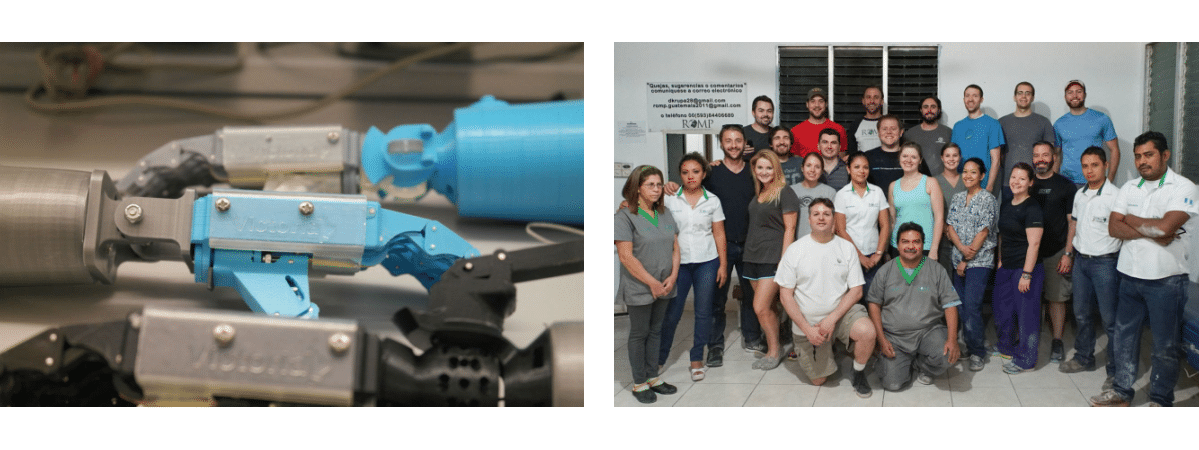
After receiving funding from Grand Challenges Canada, the Victory of the Hand project joined forces with Range of Motion from Guatemala. Together, they quickly realized that pets need quality prostheses, but without high costs. Joshua Coates, a designer, recalls his third visit, when he saw the full potential of the 3D printer.
Until then, he focused on developing the functionality of the hand. After the third trial, the functionality, ease of use and aesthetics of the hand have improved significantly. The effort paid off and they finally got results that affect the quality of life of the patients.
Since then, the Victoria Hands project has started cooperation with other partner clinics from Nepal, Haiti, Cambodia and Ecuador. Clinics have found patients, are printing, assembling hands and adjusting prostheses. The team of the Victoria Hands project sets up the equipment, trains the medical staff, offers support and accompaniment throughout the work.
From Guatemala to Cambodia and beyond
After receiving funding from Grand Challenges Canada, the Victory of the Hand project joined forces with Range of Motion from Guatemala. Together, they quickly realized that pets need quality prostheses, but without high costs. Joshua Coates, a designer, recalls his third visit, when he saw the full potential of the 3D printer.
Until then, he focused on developing the functionality of the hand. After the third trial, the functionality, ease of use and aesthetics of the hand have improved significantly. The effort paid off and they finally got results that affect the quality of life of the patients.
Since then, the Victoria Hands project has started cooperation with other partner clinics from Nepal, Haiti, Cambodia and Ecuador. Clinics have found patients, are printing, assembling hands and adjusting prostheses. The team of the Victoria Hands project sets up the equipment, trains the medical staff, offers support and accompaniment throughout the work.
 Sponsors and Patrons
The entire project would not be possible without several generous donations. Grand Challenges Canada funded initial development and trials, and helped establish additional clinics. Ultimaker donated four Ultimaker 2+ printers, a key component for the operation. The Enable Community Foundation funded the clinic in Haiti, and other donations came through crowdfunding and various forms of fundraising.
Although the Victoria arm team collaborates with E-nable, the design teams are now separate. The reason for this is that E-nable offers an open-source model, giving people the ability to download a design and print it anywhere with the help of a 3D printer. The Victory of the Hand project provides the .STL file and Gcode to contributors only. This allows for exceptional quality of the prosthetic arm as well as maintaining a good reputation.
Sponsors and Patrons
The entire project would not be possible without several generous donations. Grand Challenges Canada funded initial development and trials, and helped establish additional clinics. Ultimaker donated four Ultimaker 2+ printers, a key component for the operation. The Enable Community Foundation funded the clinic in Haiti, and other donations came through crowdfunding and various forms of fundraising.
Although the Victoria arm team collaborates with E-nable, the design teams are now separate. The reason for this is that E-nable offers an open-source model, giving people the ability to download a design and print it anywhere with the help of a 3D printer. The Victory of the Hand project provides the .STL file and Gcode to contributors only. This allows for exceptional quality of the prosthetic arm as well as maintaining a good reputation.
 New devices
In addition to 3D printing the prosthetic arm, the team has begun developing new medical devices with the help of 3D printing such as an adjustable foot prosthesis, joint and toe prostheses. They use the same hardware and materials so all they have to do is email the design to the clinic and the printing can begin.
The parts are thermally formed using a heat gun or using hot water, which is possible thanks to the thermoplastic properties of PLA. As the material softens, it can form around limbs, and when it cools it becomes rigid and supportive.
The future
The Victory Hand project aims to reach more patients, more funding and more partnerships around the world.
Spreading the word and raising funds are the main factors to make all of this happen.
Watch the video on the site and learn more about this amazing project.
New devices
In addition to 3D printing the prosthetic arm, the team has begun developing new medical devices with the help of 3D printing such as an adjustable foot prosthesis, joint and toe prostheses. They use the same hardware and materials so all they have to do is email the design to the clinic and the printing can begin.
The parts are thermally formed using a heat gun or using hot water, which is possible thanks to the thermoplastic properties of PLA. As the material softens, it can form around limbs, and when it cools it becomes rigid and supportive.
The future
The Victory Hand project aims to reach more patients, more funding and more partnerships around the world.
Spreading the word and raising funds are the main factors to make all of this happen.
Watch the video on the site and learn more about this amazing project.