
When you walk into the ERIKS facility in Alkmaar, the Netherlands, you get the impression that you've stepped into a science fiction movie. The motion-controlled door opens automatically upwards with a wave of the hand. Loaded forklifts slide silently. Men and women in blue overalls walk energetically. A series of elevated conveyor belts continuously sort packages of various sizes and shapes. Sparks fly as different parts are welded.
It is a place teeming with life, but without an iota of chaos. There is not even any noise, which is especially interesting considering the number of industrial tasks that are carried out there.
ERIKS offers technical components and related services for all branches of industry. By adding 3D printing to its production process, ERIKS is able to provide its customers with a unique service. 3D printing technology has also enabled ERIKS to further streamline its day-to-day operations.
Clean and safe
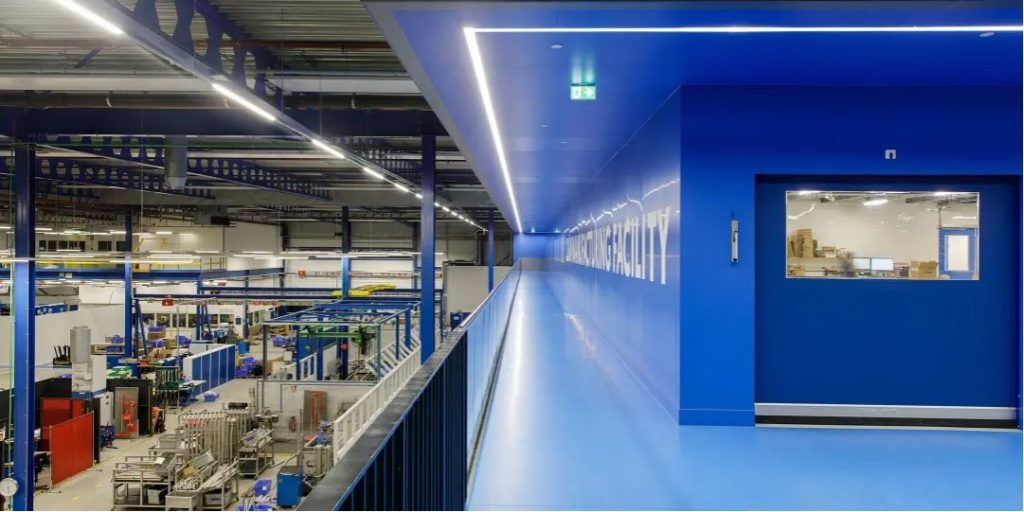
At ERIKS, the words "Clean Manufacturing Facility" are emblazoned along one of the walls. The warehouse is well organized and well lit, the floors are spotlessly clean. All in all, a perfect place for ERIKS' new 3D printing hub.
"We have been printing for some time. Mainly prototypes, but also hand tools and guides, as well as end-use parts that were previously impossible to produce," says Job van de Sande, Head of Sealing Technologies and Polymers at ERIKS, The Netherlands. "We were also able to identify several dozen custom safety parts that allowed us to improve operational safety in our manufacturing facilities."
Safety is key at ERIKS. A clean work environment is a safe work environment, or rather one in which one can work more efficiently. The company considers safety factors as integral, if not inseparable, to goals and deadlines such as production targets and profit margins.
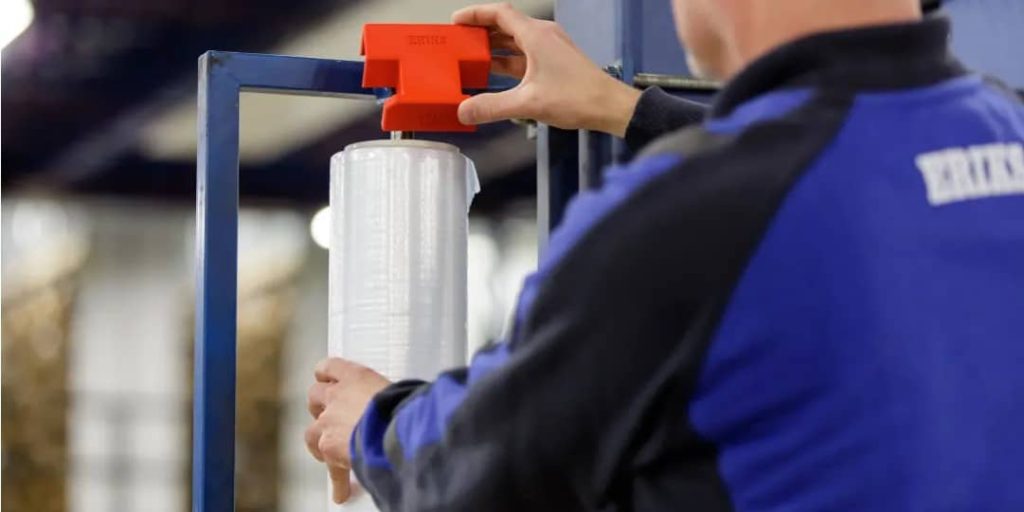
In this environment, technology like 3D printing fits perfectly into the production process, especially in the development and use of tools that improve workplace safety. For example, one of these tools is mounted on a nearly human-sized roll of wrapping film, making the task of removing and replacing the roll a quick and safe one-man job.
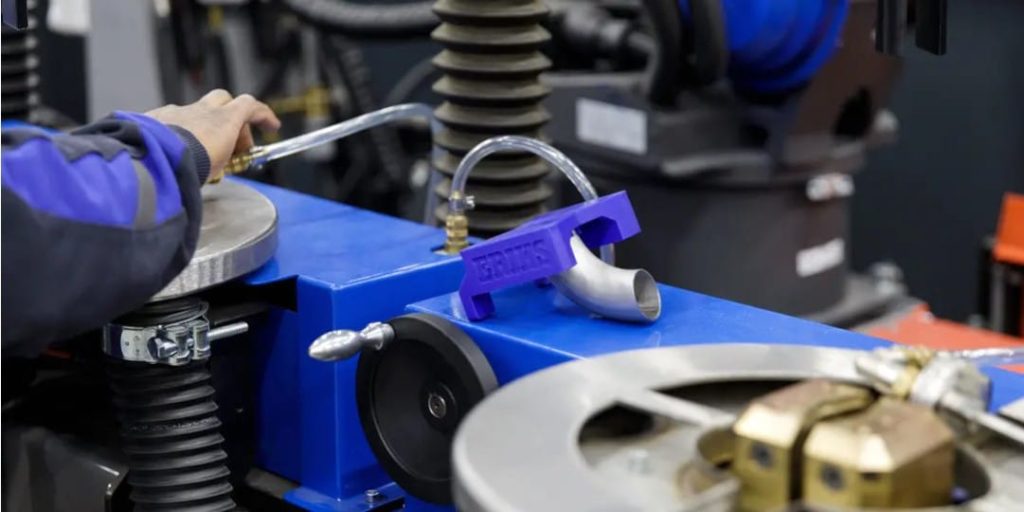
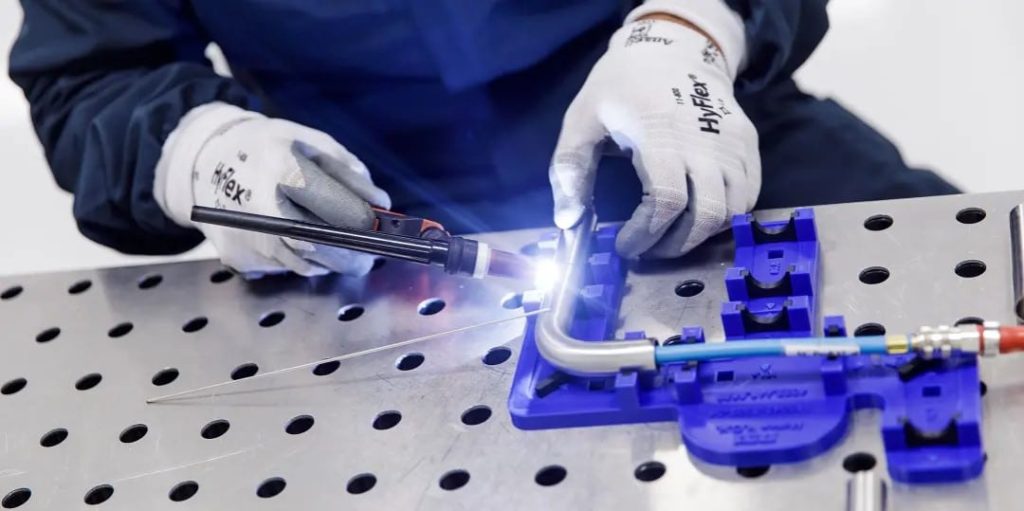
Another 3D-printed hand tool holds the piece of pipe in place, ensuring the robotic arm welds it precisely. They also developed a similar tool used by welders. Even the Ultimaker print heads are housed side by side in a specially printed holder. Individually these parts, and the changes they enable, can seem small. However, together they deliver significant results, saving time and money and potentially lives.
"By using 3D printing we actually saved 350,000 euros in our production costs increasing the 'yield' of our products while eliminating numerous safety risks," said Job.
Joint efforts to certified parts
Cleanliness and 3D printing together also represent an opportunity for ERIKS to provide valuable services to its customers.
"We see very big opportunities for our customers," Job said. "However, the tricky part is that it is very difficult to identify all these opportunities in one's business." What we do is, with the customer, carefully review the location, the production line and begin to identify and develop those opportunities together.
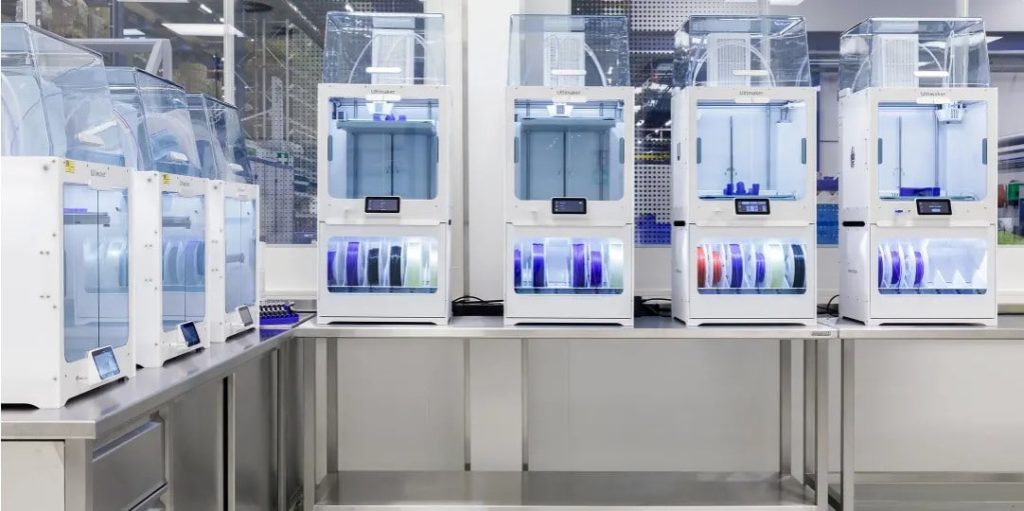
After "scanning" the location, the parts are designed by the client himself or by engineers at ERIKS. They then print them on Ultimaker S5 printers at their facility in Alkmaar. The space where the 3D printers are located has controlled conditions and the entire printing process is carefully monitored thanks to which the parts are "certified"; ERIKS guarantees not only quality and efficiency but also repeatability and reliability.
"That means a customer can order (a part) today or a year from now and we'll deliver the same part, with the same mechanical features," says Job.
However, if customers want more control, if they are part of the Ultimaker ecosystem, they can request a 3D model instead of a physical part and print it themselves. This is one of the main reasons why ERIKS chose Ultimaker. The combination of hardware, software and materials enables easy use at any time, from company to company, from city to city, from country to country. It's a win-win solution for everyone involved, saving ERIKS and its clients time and money.
"When we work closely with our clients it really helps us a lot if we have the same platform," says Job. "So we can work together on product development."
The future in food
By managing its Clean Production Facilities for production, ERIKS has already laid the foundations for the future. The facility is EC 1935/2004 compliant for its 3D printing activities and has clean production areas and a large ISO 6 class clean room. In addition to complying with European safety criteria regarding food production and handling, ERIKS is working on obtaining certifications and approvals from the FDA which will enable them to produce 3D printed parts that are food safe and can be used worldwide. The next step for them is to obtain medical and pharmaceutical ISO standards.
All in all, the ERIKS philosophy is largely aligned with the philosophy of 3D printing. Their work is simple, focused, efficient and clean with clear and defined processes. Perhaps the most important thing is that ERIKS and their clients always have complete control.
"That's why we see Ultimaker as a perfect solution for us, but also for our clients." Ultimaker allows us to see the possibilities, develop them and enjoy the fruits of 3D printing,” says Job.